




Dental Implants in Midlothian, VA
Restore your smile, replace missing teeth, and regain confidence with dental implants at Radiance Family Dentistry.
Missing one or more teeth can affect much more than your appearance. Gaps in your smile may make it difficult to chew comfortably, speak clearly, or feel confident in everyday conversations. Over time, missing teeth can also contribute to changes in your bite and jawbone.
At Radiance Family Dentistry in Midlothian, VA, Dr. M Adnan Khan, DDS, provides personalized dental implant care to help patients restore the appearance and function of missing teeth.
Whether you need to replace a single tooth, several teeth, or explore implant-supported dentures, our team can evaluate your oral health and help you understand your options.
We proudly serve patients in Midlothian, Chesterfield, Moseley, Richmond, Powhatan, and surrounding Virginia communities.
Ready to explore dental implants?
Schedule Your Dental Implant Consultation or call (804) 739-6818.
What Are Dental Implants?
Dental implants are a long-term tooth replacement option designed to restore missing teeth by replacing their underlying support.
Unlike removable dentures that rest on the gums or traditional dental bridges supported by neighboring teeth, dental implants are placed into the jawbone to support replacement teeth.
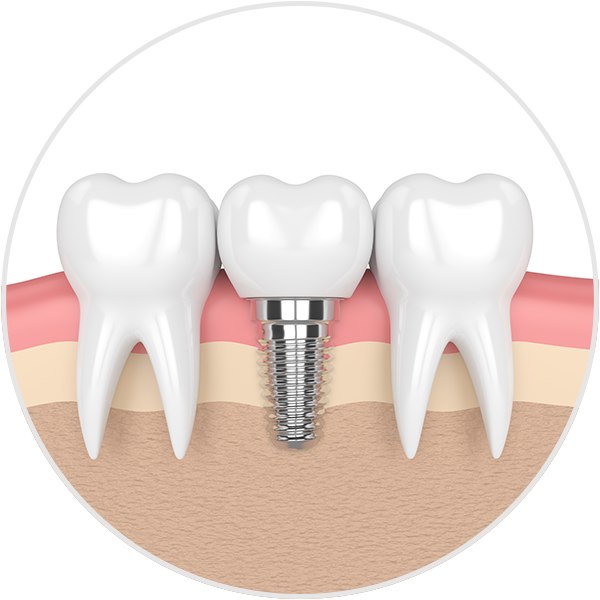
A typical dental implant restoration consists of three parts:
-
Dental implant post: A small, biocompatible post, commonly made of titanium, placed into the jawbone to replace the root of a missing tooth.
-
Abutment: A connector attached to the implant that supports the replacement tooth.
-
Dental crown: A custom-made artificial tooth designed to blend with your surrounding natural teeth.
After placement, the implant gradually bonds with the surrounding jawbone through a process called osseointegration. This creates a stable foundation for the final restoration.
Dental implants can support individual crowns, bridges, or certain types of dentures, depending on how many teeth need replacement.
Benefits of Dental Implants for Missing Teeth
Dental implants offer several advantages for patients seeking a secure, natural-looking tooth replacement.
Restore Your Ability to Chew and Speak
Missing teeth can make eating certain foods difficult and may affect speech. Dental implants provide stable support for replacement teeth, helping restore comfortable chewing and clearer speech.
Create a Natural-Looking Smile
Implant-supported dental crowns are customized to complement your natural teeth. Their shape, size, and appearance can be tailored to create a balanced smile.
Help Maintain Jawbone Health
When a tooth is lost, the surrounding jawbone can gradually shrink because it no longer receives normal stimulation from the tooth root.
Dental implants transfer chewing forces to the jawbone and may help reduce bone loss in the area where the implant is placed.
Protect Neighboring Teeth
A traditional tooth-supported bridge often requires reshaping adjacent teeth to accommodate crowns.
A single-tooth dental implant can replace a missing tooth without relying on neighboring teeth for support.
Provide a Durable Tooth Replacement
With good oral hygiene, regular dental visits, and healthy supporting bone and gum tissue, dental implants can remain functional for many years.
Although implants are designed for long-term use, their lifespan varies, and the crowns or other restorations attached to them may eventually require replacement.
Dental Implant Options at Radiance Family Dentistry
Dental implants can address several different types of tooth loss. Dr. Khan will recommend an appropriate treatment plan based on your dental examination, jawbone health, and restorative goals.
Single-Tooth Dental Implants
If you have one missing tooth, a single implant topped with a custom dental crown may provide a stable replacement without altering neighboring teeth.
This approach can be an excellent alternative to a traditional dental bridge for eligible patients.
Learn more about our dental crowns in Midlothian, VA.
Multiple-Tooth Dental Implants
If you are missing several teeth, dental implants may support an implant-supported bridge or individual replacement teeth.
Depending on the number and location of missing teeth, an implant-supported bridge may replace multiple teeth without requiring an implant for every missing tooth.
Our team will assess the available bone and recommend a treatment plan suited to your needs.
Implant-Retained Dentures
For patients missing many or all teeth in an arch, implant-retained dentures may offer greater stability than conventional removable dentures.
These restorations connect to dental implants, helping reduce unwanted denture movement during speaking and eating.
Certain implant-retained dentures are removable for cleaning, while other implant-supported restorations are fixed in place.
Learn more about implant-retained dentures at Radiance Family Dentistry.
Am I a Good Candidate for Dental Implants?
Many adults with one or more missing teeth may be candidates for dental implants. However, successful treatment depends on the condition of your mouth, jawbone, and overall health.
You may be a suitable candidate if you:
-
Have one or more missing teeth or teeth that cannot be saved.
-
Have adequate jawbone to support an implant, or are eligible for bone grafting.
-
Have healthy gums or are willing to complete necessary gum disease treatment.
-
Are in generally good health for oral surgery.
-
Are committed to maintaining excellent daily oral hygiene.
-
Want a stable alternative to a conventional bridge or removable denture.
Certain conditions, including uncontrolled diabetes, active periodontal disease, and tobacco use, can increase the risk of complications or delayed healing.
These factors do not always prevent implant treatment, but they should be carefully evaluated before surgery.
Can I Get Dental Implants If I Have Bone Loss?
Possibly. Losing teeth can lead to gradual jawbone deterioration, leaving insufficient bone to support an implant.
In some cases, dental bone grafting can help rebuild the area before implant placement.
Dr. Khan will evaluate your jawbone and discuss whether additional treatment may be necessary.
The Dental Implant Procedure: What to Expect
Dental implant treatment is completed in stages. Your timeline will depend on your oral health, the number of implants required, whether teeth need to be removed, and how quickly your jawbone heals.
Step 1: Dental Implant Consultation and Evaluation
Your treatment begins with a comprehensive evaluation at our Midlothian dental office.
Dr. Khan will review your dental and medical history, examine your teeth and gums, and use appropriate dental imaging to evaluate the area where an implant may be placed.
During this visit, we’ll discuss your tooth replacement goals, treatment options, anticipated timeline, and estimated costs.
Step 2: Preparing Your Mouth for Dental Implants
Before implant placement, some patients need preliminary treatment to create a healthy foundation.
This may include:
-
Removing a severely damaged tooth.
-
Treating active gum disease.
-
Performing a bone graft if additional jawbone support is needed.
-
Addressing other oral health conditions that could interfere with healing.
In selected cases, an implant may be placed immediately after a tooth extraction. Whether this is appropriate depends on factors such as infection, bone quality, and implant stability.
Step 3: Dental Implant Placement
During implant surgery, the dental implant post is carefully positioned in the jawbone.
Appropriate anesthesia is used to help manage discomfort during the procedure.
Radiance Family Dentistry provides implant placement and related surgical care for suitable cases. When a patient’s needs require additional expertise, the treatment plan may involve collaboration with an oral and maxillofacial surgeon or another dental specialist.
Step 4: Healing and Osseointegration
After placement, the implant needs time to integrate with the surrounding bone.
This healing phase generally takes several months, although the exact time varies from patient to patient.
Some patients may be able to wear a temporary restoration while the implant heals.
The most important goal during this stage is to establish a stable foundation for the permanent replacement tooth.
Step 5: Placing Your Final Restoration
Once the implant has integrated successfully and the surrounding tissues are ready, the final restoration can be attached.
Depending on your treatment plan, this may be a custom dental crown, an implant-supported bridge, or an implant-retained denture.
The goal is to restore your smile with a comfortable, functional replacement that complements your natural teeth.
How Long Does Dental Implant Recovery Take?
Recovery varies based on the complexity of surgery, your general health, and whether additional procedures are needed.
Following implant placement, it is common to experience some swelling, tenderness, minor bleeding, or temporary discomfort.
These symptoms typically improve during the early healing period, but the deeper process of bone integration takes considerably longer.
Your dental team may recommend:
-
Eating soft foods during the initial healing period.
-
Avoiding smoking and tobacco products.
-
Taking prescribed medications as directed.
-
Following specific brushing and cleaning instructions.
-
Attending all scheduled follow-up appointments.
Contact your dental provider promptly if you develop worsening pain, persistent bleeding, fever, or other concerning symptoms.
Although many patients return to normal activities relatively soon after surgery, complete implant treatment commonly requires several months.
Dental Implants vs. Bridges and Dentures
Dental implants are not the only option for replacing missing teeth. The best solution depends on your dental health, goals, budget, and preferences.
Dental Implants
Implants replace missing tooth roots and support restorations without depending on adjacent teeth. They can provide strong, stable support and may help maintain surrounding jawbone.
Dental Bridges
Traditional bridges use adjacent natural teeth to support one or more replacement teeth. They may be appropriate for patients who prefer a nonsurgical replacement option or are not candidates for implants.
Learn more about dental bridges in Midlothian.
Traditional Dentures
Removable dentures replace multiple missing teeth and can be an appropriate treatment for patients seeking a nonsurgical restorative option.
They generally require periodic adjustments as the shape of the gums and underlying bone changes.
Explore our denture treatment options.
During your consultation, Dr. Khan can help you compare the advantages, limitations, and maintenance requirements of each option.
How Much Do Dental Implants Cost in Midlothian, VA?
The cost of dental implants varies depending on your specific treatment needs.
Factors that can affect the total cost include:
-
The number of dental implants needed.
-
The type of restoration being placed.
-
Whether a tooth extraction is required.
-
The need for bone grafting or other preparatory treatment.
-
Imaging, surgical complexity, and restorative materials.
-
Your available dental insurance benefits.
A single dental implant with a crown will typically have a different total cost than an implant-supported bridge or an implant-retained denture.
Because every patient’s needs are different, the most accurate way to determine your cost is through a dental implant consultation.
At Radiance Family Dentistry, we can review your proposed treatment plan and discuss estimated costs and applicable insurance benefits before you decide how to proceed.
Call (804) 739-6818 to schedule an implant consultation and discuss your options.
How Long Do Dental Implants Last?
Dental implants are designed to provide a durable, long-term tooth replacement solution.
With proper care, they can remain functional for many years. However, implant longevity depends on several factors, including oral hygiene, gum health, bone support, smoking, and general health.
The dental implant itself cannot develop a cavity, but the gums and bone surrounding it can become inflamed or infected.
Conditions such as peri-implantitis can damage the supporting bone and threaten implant stability.
Regular dental examinations and consistent home care help protect your investment and reduce the risk of complications.
How to Care for Your Dental Implants
To maintain your dental implants:
-
Brush twice a day using a soft-bristled toothbrush.
-
Clean between your teeth and around implant restorations daily.
-
Use floss or other cleaning aids recommended by your dentist.
-
Attend regular professional dental checkups and cleanings.
-
Avoid tobacco products, which can interfere with healing and long-term implant health.
-
Contact your dentist if you notice bleeding, swelling, looseness, or discomfort around an implant.
Our team can provide personalized maintenance instructions based on the type of implant restoration you receive.
You can also learn more about our dental cleanings and checkups.
Why Choose Radiance Family Dentistry for Dental Implants?
Choosing the right dental provider is an important part of the implant treatment process.
At Radiance Family Dentistry, we focus on helping patients make informed decisions about restoring their smiles through individualized treatment planning and comprehensive dental care.
Dental Care Led by Dr. M Adnan Khan, DDS
Dr. Khan has completed postdoctoral general practice residency training and continuing dental education. His professional memberships include the American Dental Association and the International Congress of Oral Implantologists.
Learn more about Dr. M Adnan Khan and his professional background.
Comprehensive Restorative Dental Services
Our practice offers a range of restorative services, including dental implants, crowns, bridges, dentures, tooth extractions, and related treatments.
This allows us to evaluate multiple replacement options and develop a treatment plan based on your individual needs.
Convenient Midlothian Location
Our office is located on Hull Street Road in Midlothian, serving patients from Chesterfield County, Moseley, Richmond, Powhatan, and surrounding communities.
We welcome patients who are considering dental implants for the first time, as well as those exploring alternatives to their current dentures or bridges.
Frequently Asked Questions About Dental Implants
Are dental implants painful?
Dental implant surgery is performed using appropriate anesthesia to help minimize discomfort. Some swelling and soreness are normal afterward, but these symptoms can usually be managed with the postoperative care recommended by your dental provider.
How long does the dental implant process take?
The complete process often takes several months. Treatment time depends on healing, the number of implants, whether bone grafting is necessary, and the type of final restoration.
Can dental implants be placed in one day?
Some patients qualify for implant placement at the same appointment as a tooth extraction, and selected cases may be eligible for immediate temporary teeth. However, immediate placement or restoration is not appropriate for everyone. Dr. Khan can explain whether either approach is suitable for your case.
Can I get dental implants if I have gum disease?
Active gum disease generally needs to be treated before dental implant surgery. Healthy surrounding gum tissue and adequate bone support are important for long-term implant stability.
Do dental implants look and feel like natural teeth?
Implant-supported crowns can be designed to resemble natural teeth in shape, color, and appearance. Once healing is complete, many patients find that implant restorations provide comfortable, stable function, although they do not have the exact same sensation as natural teeth.
Does dental insurance cover dental implants?
Coverage varies by dental insurance provider and plan. Some policies include benefits for parts of implant treatment, while others limit or exclude coverage. Our team can help you understand the treatment estimate and discuss your applicable benefits.
What happens if a dental implant fails?
Dental implants have a strong record of clinical success, but complications or implant failure can occur. Causes may include infection, insufficient bone integration, or problems with the surrounding tissues. Treatment may involve addressing the underlying problem, removing the implant, or considering replacement after healing.
Am I too old for dental implants?
Age alone does not determine eligibility. Older adults can be candidates for implants when their jawbone, oral health, and overall medical condition support treatment.
Schedule Your Dental Implant Consultation in Midlothian, VA
You don’t have to live with gaps in your smile or continue struggling with uncomfortable tooth replacement options.
At Radiance Family Dentistry, Dr. Khan and our dental team are here to help you explore solutions for missing teeth and determine whether dental implants may be right for you.
From your initial evaluation through treatment planning and ongoing dental maintenance, our goal is to provide clear information and personalized care.
Radiance Family Dentistry
13841 Hull Street Road, Suite 5
Midlothian, VA 23112
Phone: (804) 739-6818
Office Hours: Monday–Thursday, 8:00 AM–5:00 PM
Schedule Your Dental Implant Consultation
Take the first step toward a healthier, more confident smile. Contact Radiance Family Dentistry today to explore dental implants in Midlothian, VA.
Ready to Schedule a Consultation?
Dr. Khan offers a number of dental treatments that can keep your mouth healthy and your smile beautiful. Contact us today!
Evaluation for Dental Implants
If, like many others, you feel implant dentistry is the choice for you, we ask that you undergo a dental/radiographic examination and health history. During these consultation visits, your specific needs and considerations will be addressed by either Dr. Khan or by an Oral and Maxillofacial Surgeon referred by our practice. Your questions and concerns are important to us and our team will work with you very closely to help make your procedure a success.
Surgical Advances in Dental Implants
Using the most recent advances in dental implant technology, Dr. Khan is able to place single stage implants. These implants do not require a second procedure to uncover them, but do require a minimum of six weeks of healing time before artificial teeth are placed. There are even situations where the implant can be placed at the same time as the tooth extraction – further minimizing your number of surgical procedures.
Dental implant placement is a team effort between a periodontist and a restorative dentist. Dr. Khan performs the actual implant surgery, initial tooth extractions, and bone grafting if necessary. The restorative dentist (your dentist) fits and makes the permanent prosthesis. Your dentist will also make any temporary prosthesis needed during the implant process.
Dental Implant Procedure
Dental implants are metal anchors, which act as tooth root substitutes. They are surgically placed into the jaw bone. Small posts are then attached to the implant, which protrude through the gums. These posts provide stable anchors for artificial replacement teeth.
For most patients, the placement of dental implants involves two surgical procedures. First, dental implants are placed within your jaw bone. For the first three to six months following surgery, the implants are beneath the surface of the gums, gradually bonding with the jaw bone. You should be able to wear temporary dentures and eat a soft diet during this time. At the same time, your restorative dentist designs the final bridgework or denture, which will ultimately improve both function and aesthetics.
After the dental implant has bonded to the jaw bone, the second phase begins. The surgeon will uncover the implants and attach a small healing collar. Dr. Khan can then start making your new teeth. An impression must be taken. Then posts or attachments can be connected to the implants. The replacement teeth are then made over the posts or attachments. The entire procedure usually takes six to eight months. Most patients do not experience any disruption in their daily life.